The Import Reality
Why Buying Local Saves You Thousands: The Reality of Importing Pianos to Barbados
If you are a music enthusiast or a homeowner in Barbados looking to acquire a high-end acoustic piano, you may be tempted to browse international listings. However, the logistical and financial reality of importing an instrument into the island is complex.
1. The Landed Cost: "Tax on Tax"
Pianos are classified under HS Code 9201.10. While the initial purchase price in the US or UK may seem lower, the Barbadian tax regime applies multiple layers of duty:
- Import Duty: 10% of the CIF (Cost, Insurance, and Freight) value.
- Environmental Levy: 1% of the CIF value.
- VAT: 17.5%. Crucially, VAT is calculated on the sum of the CIF value, the duty, and the levy, resulting in a compounding "tax on tax" effect.
2. The Port Bureaucracy
Importing requires significant documentation, including the C-63 form, supplier invoices, and airway bills. Importers must often attend a Customs interview and be present for a physical examination of the goods at their residence. This process typically takes a minimum of four business days after arrival.
3. The Climate Risk
Barbados' tropical maritime climate is beautiful but challenging for acoustic instruments. A new import requires 6 to 12 months to stabilize its wood moisture content before it can hold a reliable tuning.
The Local Advantage
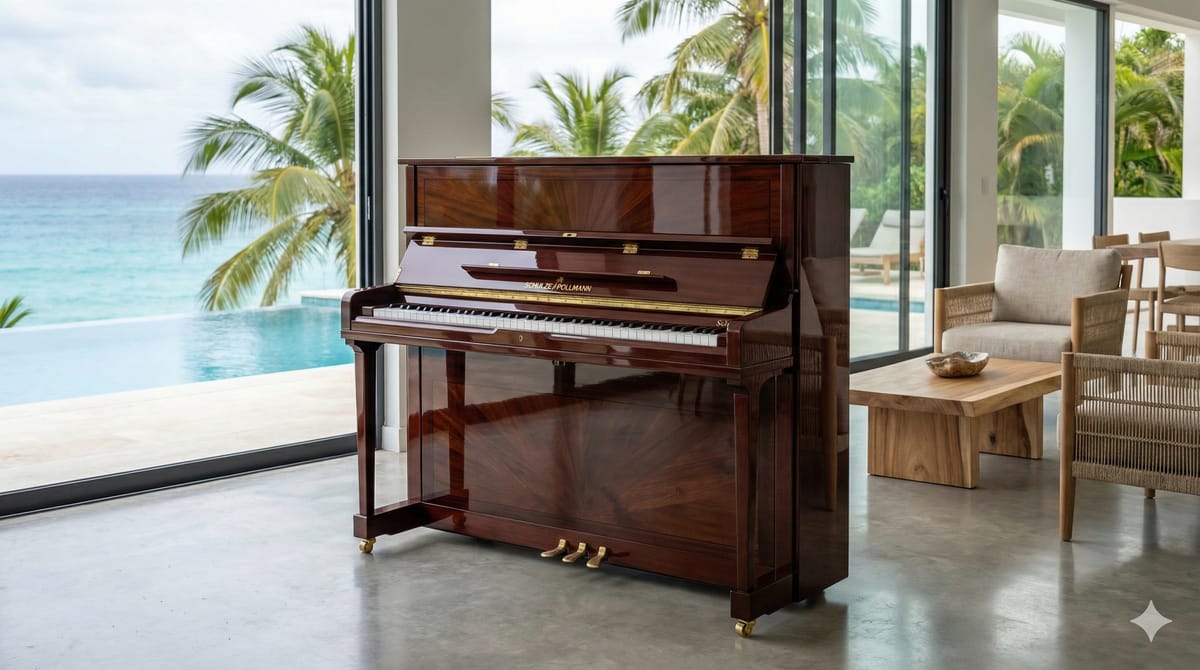
Buying an instrument already on-island—like our Schulze Pollmann SU122A—means all duties are paid, the port "hassle" is eliminated, and the piano is already fully acclimated to the local environment, ensuring immediate tuning stability and longevity.